
the ancient ritual of gua sha for facial wellbeing
The pursuit of wellbeing is a way of life, not just the result of occasional efforts. It's in the daily practices and mindful rituals we embrace. One such practice, an ancient technique rooted in traditional East Asian medicine, is gua sha.¹
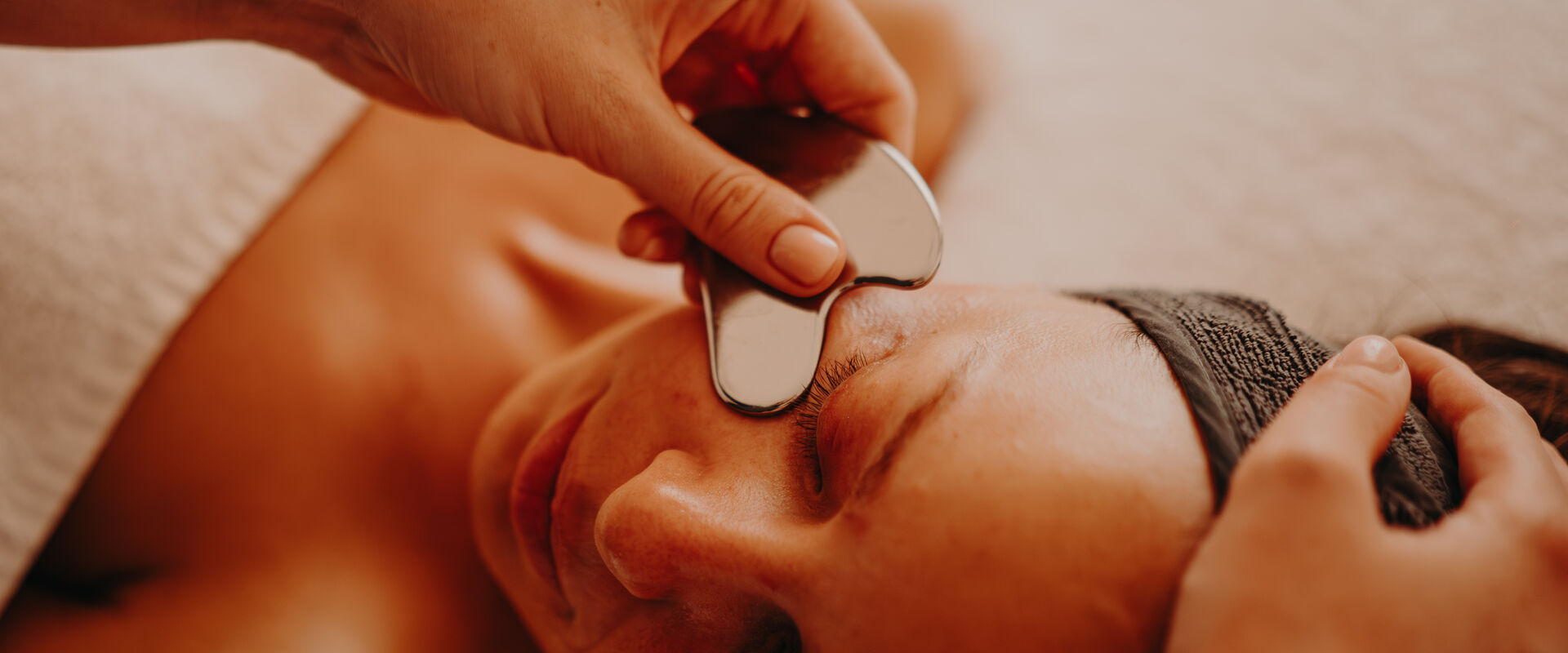
Translated roughly as "scraping sand," gua sha has been used for centuries to support the body’s natural processes.¹ While historically applied more intensely to the body, the modern facial gua sha ritual is a gentle yet effective way to help nourish your mind, body, and skin.¹ It involves using a smooth, contoured tool to lightly sweep the skin, transforming a simple skincare step into a deeply connecting moment of self-care. It’s an easy, accessible way to claim your time and build balance into your daily routine.
gua sha benefits in supporting your skin's wellbeing
Consistent practice with the correct movements can unlock a suite of advantages for your complexion. The tool doesn't give you the benefits; the movements do. Here are some gua sha facial benefits:
-
supports your skin’s natural flow and vitality
The gentle, sweeping massage movements encourage the movement of fluid and microcirculation beneath the surface.¹ This helps to promote circulation, which contributes to a balanced-looking complexion and a natural, healthy glow.¹
“It is hypothesised that the skin, the nervous system and immune system interact with one another to generate a cascade of physiological responses to the scraping, through which scraping may result in therapeutic benefits.” (Source: Exploring scraping therapy: Contemporary views on an ancient healing – A review) -
helps sculpt and define facial features
Regularly working gently but firmly along the contours of your jawline, cheekbones, and brow bone can offer a temporary sculpting effect, helping to define your facial features and contributing to a sense of youthfulness.¹ -
reduces puffiness and soothes the appearance of inflammation
The massaging motion helps to gently move excess fluid that can build up, particularly around the eyes and cheeks. This is one of the most visible gua sha benefits, helping to reduce puffiness and achieve a plumper complexion.¹ -
relieves tension in muscles (face, neck, shoulders)
Soothing the facial, neck, and shoulder muscles with the tool’s edge can provide significant relief. This release of facial tension can also help minimise the appearance of tension-related wrinkles and fine lines.¹ -
promotes product absorption
Using the tool after applying your favourite facial oil or other skincare products helps boost the settling and absorption of those nourishing ingredients so that your skin gets the most out of them. -
supports long-term skin health
By becoming a regular ritual, the practice supports the skin’s long-term health, contributing to improved elasticity and a vibrant glow.¹ You deserve the best outcomes from the effort you put into your wellbeing.
what material works best for gua sha massage?
The material you choose is an important part of your ritual. Our Gua Sha Facial Tool reflects our commitment to sustainable and durable choices.
natural stones vs. stainless steel
Traditionally, gua sha tools are crafted from beautiful, natural stones like jade, rose quartz, or obsidian. These materials are valued for their cooling effect, which can feel beautifully grounding for a mindful ritual. However, stones are naturally fragile. They require careful handling and, if broken, are less sustainable in the long term.
For this reason, endota's choice is stainless steel. The material offers superior longevity and hygienic properties, making it a reliable and sustainable tool to enhance your at-home facial ritual for years to come.

the best way to incorporate gua sha into your routine
Making gua sha a consistent part of your routine is key to experiencing its full spectrum of benefits. We’re here to help you care for your wellbeing.
morning vs. evening routine: find your balance
-
Morning: A quick 5-minute ritual is excellent for reducing overnight puffiness and giving you a fresh, energising start to your day.
-
Evening: A longer, more contemplative practice can become a beautiful way to unwind, relieving any facial and jaw tension accumulated throughout the day.
how often you should practice gua sha
Consistency over intensity is the endota approach. We suggest incorporating the practice a few times each week to help your skin be its brightest and healthiest self.
pairing gua sha with skincare
A facial oil, like our Vitamin Treatment Oil or Phyto-Renewal Oil, is the ideal partner, providing the perfect glide while infusing your skin with the best ingredients. The gentle movements can be used after applying serums, oils, and moisturisers to help with product absorption.¹
face vs. body: different approaches
-
Face: Movements are gentle yet firm, focusing on outward and downward strokes along the natural contours to help relieve tension and reduce puffiness.
-
Body: A firmer, more invigorating pressure using our Gua Sha Body Tool can be applied, often focusing on larger muscle areas to help temporarily promote circulation.
creating a mindful ritual
The ritual extends beyond the physical gua sha benefits. This practice is your time to nurture your skin and inner balance.
-
Mindfulness: Before you begin, take a few deep, cleansing breaths. Use the rhythmic motion as a point of focus, turning your routine into a moving meditation.
-
Adaptation: The flexibility of this ritual means it adapts to you. Even one minute spent mindfully sweeping your neck and jaw can make a difference.
gua sha FAQs
can gua sha be done every day?
Yes, a very gentle, quick routine can be done daily, particularly in the morning, to reduce puffiness.¹ However, a more comprehensive ritual a few times a week is generally enough to achieve the full gua sha benefits. Listen to your skin's needs.
is gua sha safe for acne-prone skin?
While the technique is gentle, it should never be performed over active, broken, or cystic breakouts, as this can irritate. You can still work around these areas, focusing on the neck and jawline.
does gua sha really define the face?
The massaging movements help to move fluid that causes puffiness and relieve muscle tension, which can give the temporary appearance of more defined facial features. This is a simple, non-invasive way to achieve a sculpting effect.
what oil is best to use with gua sha?
A face oil is the ideal partner for your gua sha ritual. It not only provides the smooth glide needed to avoid dragging the skin but also increases absorption, allowing your complexion to fully benefit from each nourishing ingredient. The right oil depends on your skin goals:
If you’re focused on hydration and radiance, use our Vitamin Treatment Oil. This nutrient-rich blend of argan, avocado, and rosehip oils deeply hydrates while helping to brighten and smooth the skin. It supports a more radiant, youthful-looking complexion and absorbs beautifully during your gua sha routine.
If your goal is renewal and firmness, use our Phyto-Renewal Oil, a plant-based retinol alternative powered by 14 active botanical oils. With bakuchiol and cacay oil to help refine skin texture, reduce fine lines, and promote cell renewal, it pairs perfectly with a gua sha to encourage smoother, more resilient skin over time.
Whether you’re chasing glow or firmness, using a face oil with gua sha helps your skin drink in the benefits of your chosen formula, amplifying both your results and your ritual.
references
¹Chu, E. C. P., Wong, A. Y. L., Sim, P., & Krüger, F. (2021, August 27). Exploring scraping therapy: Contemporary views on an ancient healing – A review. Journal of Family Medicine and Primary Care, 10(8), 2757–2762. https://doi.org/10.4103/jfmpc.jfmpc_360_21