

Before most of us have left the house in the morning, we have already applied several products to our skin and hair, cooked breakfast and handled packaging across various products. It feels routine because it is. But within that routine, there are chemicals most of us have never thought twice about.
Some of those chemicals are now being studied for their potential to interfere with the body’s hormonal system. They are called endocrine disruptors, and while the science is still developing, awareness of them is growing quickly among researchers, clinicians and women paying closer attention to what they put in and on their bodies.
According to Dr Sonia Davison, Endocrinologist and part of the endota Wellbeing Conversation, this is an emerging field and we don’t yet have the full picture. But as she notes, awareness is the first step. This article explains what endocrine disruptors are, where they are commonly found and how to make small, meaningful changes without overhauling your entire routine.
what exactly is an endocrine disruptor?
The endocrine system is a network of glands and organs that produce hormones, the chemical messengers that regulate everything from metabolism and mood to skin health, sleep and fertility. These hormones travel through the bloodstream and communicate with cells and organs throughout the body.¹
“Hormones are very delicate, tiny little chemicals that make a message happen somewhere else,” Dr Davison explains. “And endocrine disruptors can interrupt the impact of those hormones. They can alter the production and function of the hormones.”
Endocrine disruptors, often referred to as EDCs or hormone disrupting chemicals, are synthetic chemicals that can interfere with this system in three main ways: by mimicking hormone action, by blocking hormones from doing their job or by altering how they are produced and broken down in the body.
The science is still developing and health bodies including the Endocrine Society, the National Institute of Environmental Health Sciences and the World Health Organisation continue to monitor and review the evidence.³
where are endocrine disruptors found?
The honest and slightly uncomfortable answer is: almost everywhere. “We can find endocrine disruptors all around us, unfortunately, in very, very small quantities,” Dr Davison says. “In the air, in water, in packaging, in plastics, in products around us, including skincare products. We just really don’t know the limit.”
They turn up in more places than most of us would expect. Plastic food and drink packaging, non-stick cookware, some cleaning products and a range of personal care items all feature on the list. And because we use personal care products directly on our skin every day, that's particularly worth paying attention to.
“Your skin is not separate from your hormone or endocrine system," Dr Davison says. "It's very important to understand that chemicals may enter via the skin and potentially into the bloodstream, and potentially have a flow-on effect to your hormones.”⁶
When it comes to skincare and haircare specifically, Dr Davison points to a few ingredients worth knowing by name:
-
Parabens are preservatives used widely in personal care products and have a well-documented connection to hormonal research.⁴
-
Phthalates are less visible, often hiding behind the word fragrance or parfum on an ingredient label rather than being listed directly.
-
PVC in product packaging has also been linked to endocrine disruption.⁵

how might they affect hormonal health?
This is where the science calls for careful language, and Dr Davison is measured in how she frames it. The research does suggest that EDC exposure may be linked to hormonal shifts that affect fertility and reproductive health, though establishing direct causation remains complex.⁷
“It’s really tricky to try and see what the actual endocrine disrupting chemicals are doing versus other things in this world and within our bodies,” she acknowledges. “But we think from looking at big populations and exposure to these chemicals that they can affect hormones and they can affect things like fertility and reproduction.”²
your skincare routine is a good place to start
When it comes to endocrine disruptors in skincare, Dr Davison suggests starting with ingredient awareness. “When choosing skincare products to minimise exposure, just be very aware of a few different words,” she says. “There are the parabens, there are the phthalates. Things like DEP, DBP, DiINP and DEHP are chemicals that we probably should try and avoid. And those labelled with fragrance, because that has also been found to be an endocrine disruptor in some cases.”
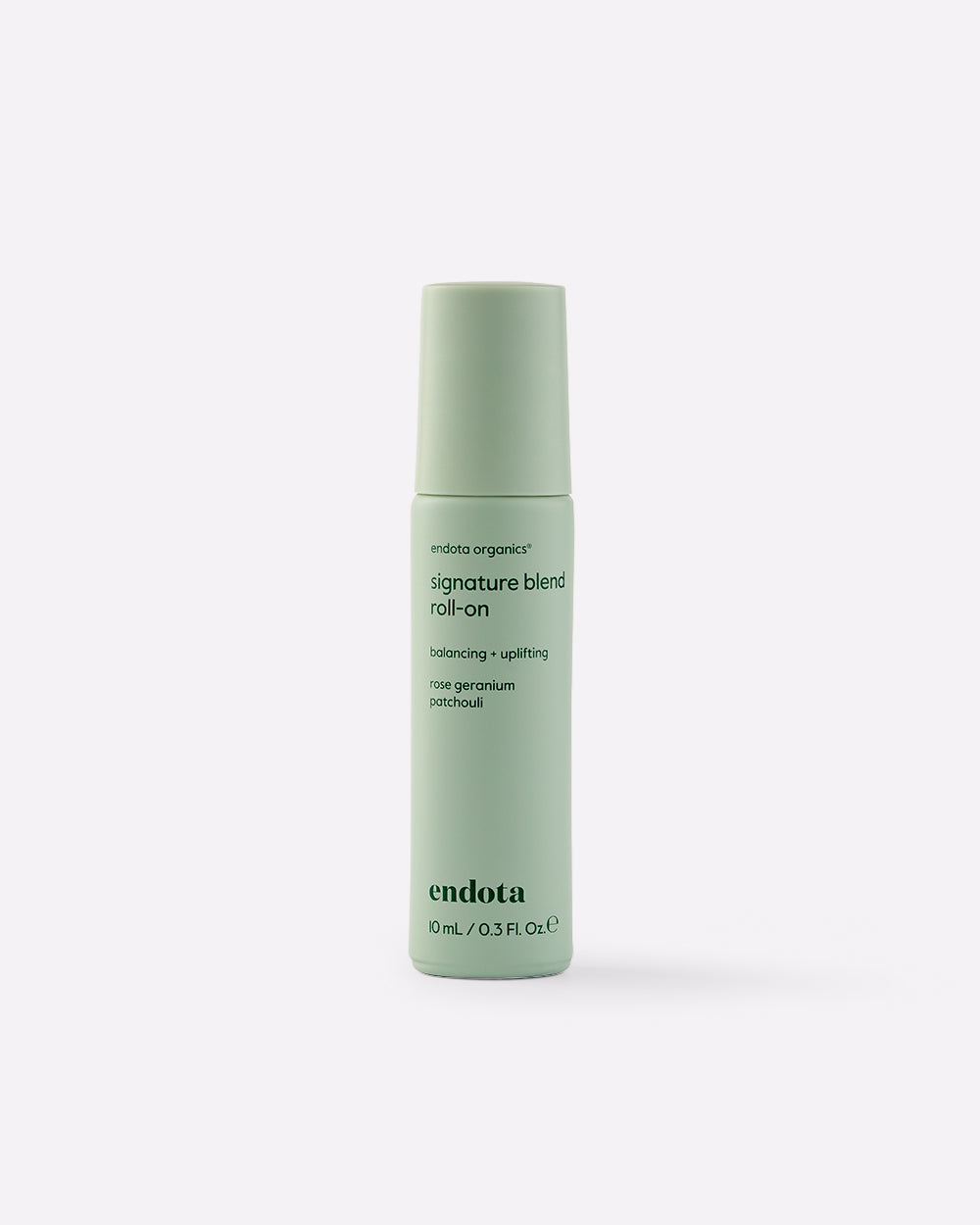
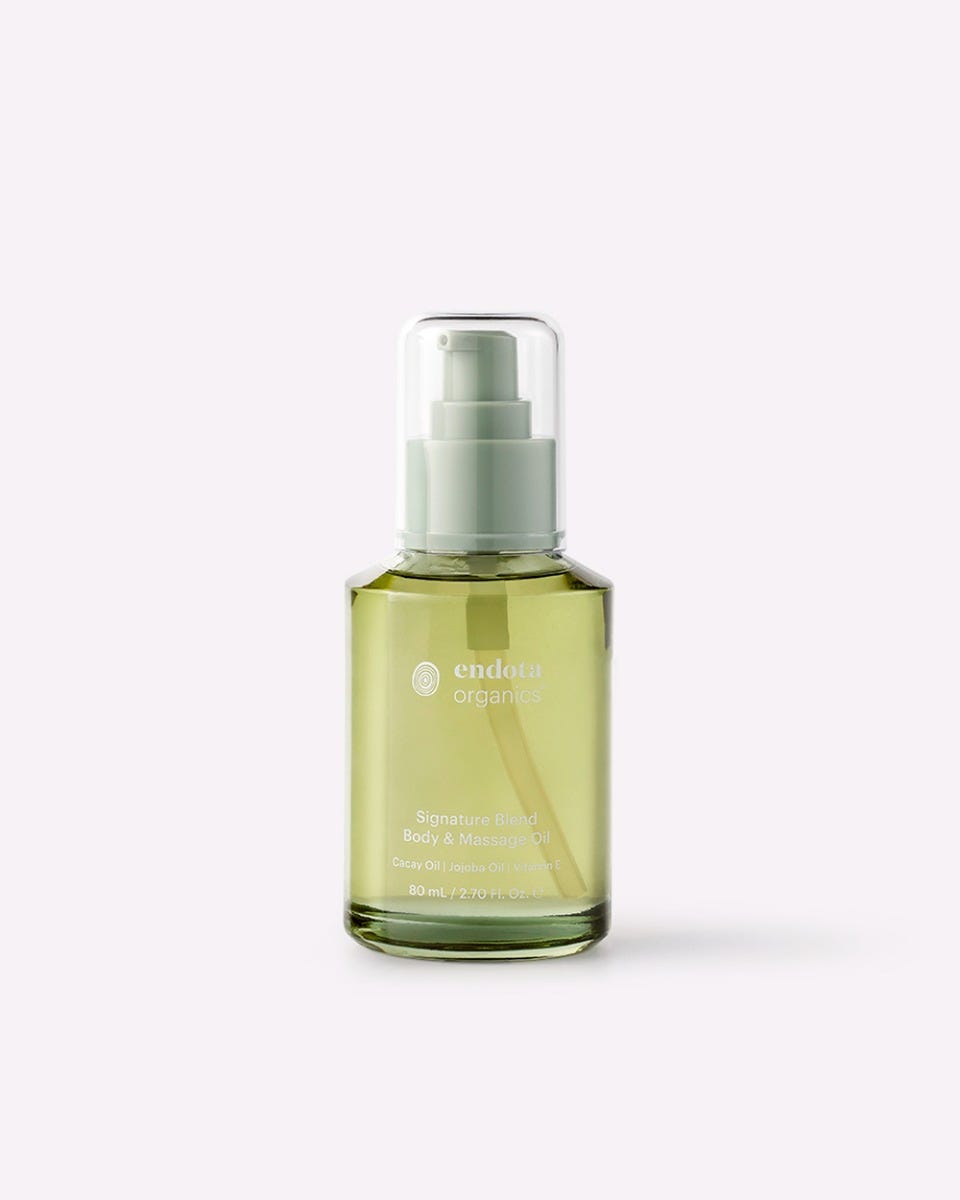
The endota Organics® skincare range is a natural place to start if you're looking to make a switch. It's formulated without parabens, phthalates, synthetic fragrance or oxybenzone, and the Organic Infusion Facial uses products from the same range, so the same thoughtful approach to ingredients carries through into the treatment room.

practical steps to reduce exposure, without the overwhelm
Dr Davison is the first to acknowledge that it is impossible to avoid everything, and that trying to do so would be both exhausting and unrealistic. “It is really hard when we’re busy,” she says, “but just having a little bit more awareness is the first step.”
A few practical places to begin, approached as gentle upgrades rather than an audit:
-
Start with products applied over large areas of the body daily, such as body lotion and moisturiser, as these represent the greatest cumulative skin exposure.
-
When choosing personal care products, look for fragrance-free or naturally fragranced options where possible.
-
When reading ingredient labels, a few specific names are worth knowing. Parabens appear as methylparaben, ethylparaben, propylparaben and butylparaben. Phthalates often hide within the word fragrance or parfum rather than being listed directly. Oxybenzone and artificial dyes are also worth looking out for.
-
Choose glass or stainless steel over plastic for food and drink storage where practical and avoid heating food in plastic containers, as research suggests heat may accelerate the leaching of chemicals from plastic.¹⁰
-
Replace non-stick cookware gradually as pieces become worn.
For those wanting to explore this topic further, the endota Wellbeing Conversation offers content from endota’s panel of experts, including Dr Davison, as part of a broader approach to hormone-supportive living.
For women building a hormone safe skincare routine in Australia and looking to make considered choices, awareness is both the starting point and the ongoing practice. You don’t need to do everything at once, even one small change is worth making.
“It is really hard when we’re busy, but just having a little bit more awareness is the first step.”
frequently asked questions
What are endocrine disruptors in simple terms?
Endocrine disruptors are synthetic chemicals that may interfere with the body’s hormonal system, either by mimicking hormones, blocking them or altering how they are produced and broken down.²
Are all parabens harmful?
The research on parabens and hormones is ongoing and the picture is not yet complete. Many manufacturers have moved away from them as a precautionary measure. Avoiding them where possible is a reasonable approach while the science continues to develop.
How do I know if my skincare contains endocrine disruptors?
Reading ingredient labels is the most direct approach. Look for parabens listed by name, phthalate identifiers such as DEP or DBP and the word fragrance or parfum, which may mask undisclosed chemicals.
Do endocrine disruptors in skincare affect my hormones?
The research suggests they may, particularly with cumulative exposure over time, though the science is still developing and direct causation is difficult to establish.⁷
What’s the difference between phthalates and parabens?
Both are types of hormone disrupting chemicals commonly found in personal care products but they work differently. Parabens are preservatives and are usually listed by name on ingredient labels.⁴ Phthalates are plasticising agents most often hidden within the word fragrance or parfum, which means they may not appear explicitly on the label.⁵ Both are worth being aware of when choosing products.
How many products should I replace and where do I start?
You don’t need to replace everything at once. A practical first step is to focus on products applied over large areas of skin daily, such as body lotion and moisturiser, as these represent the greatest cumulative exposure.⁸ From there, work through your routine gradually at whatever pace feels manageable.
references
¹ Hiller-Sturmhöfel, S., & Bartke, A. (1998). The Endocrine System: An Overview. Alcohol Health and Research World, 22(3), 153. https://pmc.ncbi.nlm.nih.gov/articles/PMC6761896/
² Diamanti-Kandarakis, E., Bourguignon, J. P., Giudice, L. C., Hauser, R., Prins, G. S., Soto, A. M., Zoeller, R. T., & Gore, A. C. (2009). Endocrine-disrupting chemicals: an Endocrine Society scientific statement. Endocrine Reviews, 30(4), 293–342. https://doi.org/10.1210/er.2009-0002
³ World Health Organization & United Nations Environment Programme. (2013). State of the science of endocrine disrupting chemicals 2012. WHO Press. https://www.who.int/publications/i/item/9789241505031
⁴ Darbre, P. D., & Harvey, P. W. (2008). Paraben esters: review of recent studies of endocrine toxicity, absorption, esterase and human exposure, and discussion of potential human health risks. Journal of Applied Toxicology, 28(5), 561–578. https://doi.org/10.1002/jat.1358
⁵ Hauser, R., & Calafat, A. M. (2005). Phthalates and human health. Occupational and Environmental Medicine, 62(11), 806–818. https://doi.org/10.1136/oem.2004.017590
⁶ Juliano, C., Magrini, G. A., & Pirisino, R. (2021). The skin absorption of some chemical contaminants found in cosmetics: a narrative review. Cosmetics, 8(3), 72. https://doi.org/10.3390/cosmetics8030072
⁷ Gore, A. C., Chappell, V. A., Fenton, S. E., Flaws, J. A., Nadal, A., Prins, G. S., Toppari, J., & Zoeller, R. T. (2015). EDC-2: The Endocrine Society’s second scientific statement on endocrine-disrupting chemicals. Endocrine Reviews, 36(6), E1–E150. https://doi.org/10.1210/er.2015-1010
⁸ Zota, A. R., & Shamasunder, B. (2017). The environmental injustice of beauty: framing chemical exposures from beauty products as a health disparities concern. American Journal of Obstetrics and Gynecology, 217(4), 418.e1–418.e6. https://doi.org/10.1016/j.ajog.2017.07.020
⁹ Environmental Working Group. (n.d.). EWG Skin Deep cosmetics database. https://www.ewg.org/skindeep/
¹⁰ Muncke, J., Andersson, A. M., Backhaus, T., Belcher, S. M., Beronius, A., Bloom, M. S., Burger, M. J., Geueke, B., Groh, K. J., Heindel, J. J., Trasande, L., & Scheringer, M. (2020). Impacts of food contact chemicals on human health: a consensus statement. Environmental Health, 19(1), 25. https://doi.org/10.1186/s12940-020-00572-5
Dr Sonia Davison is an endocrinologist and women’s health expert. She is part of the endota Wellbeing Conversation, a group of experts who share evidence-based insights to help people better understand how their bodies and minds work.